

A decade of Rana Plaza collapse without justice, compensation!
Machine-translated from Bangla. মূল খবর বাংলায় পড়ুন
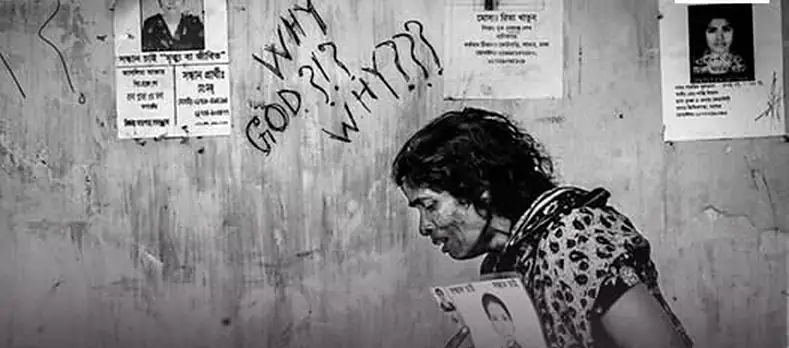
Today marks a decade since the Rana Plaza collapse. On April 24, 2013, workers arrived as usual at 8 am at the garment factories inside the nine-story Rana Plaza building beside the Dhaka-Aricha highway in Savar. An hour and a half after work began, at 9:30 am, the building collapsed. In an instant, the building turned into a city of death. A total of 1,136 people died as victims of structural murder. Several thousand others were injured, many of whom are crippled or emotionally shattered today. A decade has passed. Justice is still not finished.
Most of the victims have not received adequate compensation. Out of 594 witnesses in the murder case filed over the killing of workers in the Rana Plaza collapse, the testimony of only 93 witnesses has been completed. The case is still pending in the Dhaka District and Sessions Judge's Court. The state side says they are keen to finish the trial quickly, but reality tells a different story. Frustration is evident in the voice of victim Masuda Khatun — "A decade has passed waiting for justice. But we did not get justice. None of those because of whom so many workers were murdered received any punishment."
A major obstacle to the progress of the case was multiple stay orders from the upper court. After the charge sheet was submitted in 2016, the charges were framed another year later. Afterward, when some accused challenged the charges in court, the recording of testimony remained halted for about five years. The recording of testimony resumed again in 2022. Currently, among the 38 accused in the case, only building owner Sohel Rana is in jail. Three accused have died. Labor leader Kalpana Aktar considers the procedural slowness of the case to be 'reluctance' and 'a lack of sincerity from the previous government.'
Behind the collapse of Rana Plaza were flaws in construction, violation of the design, and the use of substandard materials. Because of this, in 2015, the CID submitted a charge sheet against 18 people including Sohel Rana. But here too, stay orders from the upper court have stalled the recording of testimony. The cases of Rajuk and the Anti-Corruption Commission (ACC) are still pending. Many workers in the Rana Plaza incident have not yet received compensation. Labor organizations claim that the money that was supposed to be paid based on loss of earnings as compensation has not actually happened.
Rafiqul Islam Sujon, president of the Bangladesh Garments and Industrial Workers Federation, said, "Every year on this day we demand—give compensation, give justice. The government has confiscated Sohel Rana's property, but it has not yet been distributed among the workers." He demands that April 24 be declared a National Mourning Day. The death of over a thousand workers on this day is not just a tragedy, it is a symbol of the crisis in Bangladesh's garment sector. Cracks had appeared in the building 24 hours before it collapsed.
Workers then left their workplaces and went to safe places. But responsible officials of the administration assured—"This is nothing major." The next morning, as soon as production started, Rana Plaza collapsed. If action had been taken that day, perhaps hundreds of lives could have been saved. The rubble of Rana Plaza is no longer there, but concrete debris is scattered in various places. A martyr altar has been built—'Protest-Resistance'. People who lost relatives still come here and cry, and workers join movements.
All the land owned by Sohel Rana is now in government custody. Adhor Chandra High School ground, where the process of corpse identification and handover continued day after day, still bears the reflection of grief.
This story first appeared on the Prantik News Facebook page.