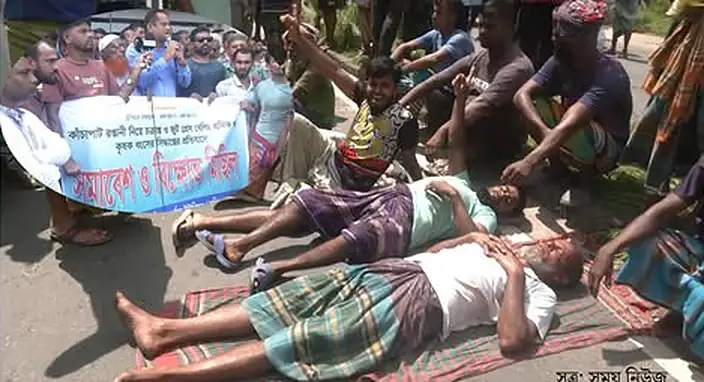

Bodies of 56,769 expatriate workers returned to the country in three decades
Machine-translated from Bangla. মূল খবর বাংলায় পড়ুন
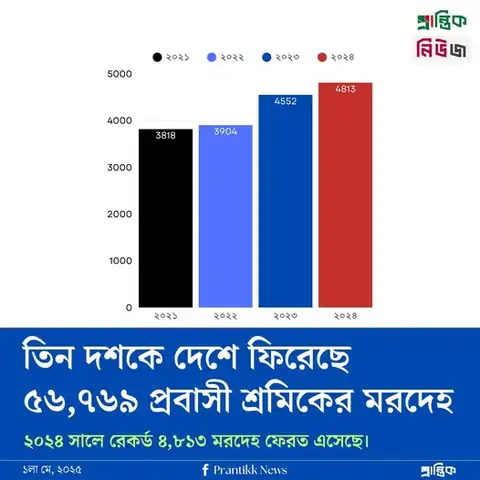
In hope of a future and driven by the urge to bring smiles to their families' faces, thousands of Bangladeshi workers set off for foreign lands every year. Some carry the cost of medicine for their parents, while others hold dreams of their children's education in their eyes. But for many, the final destination of that journey becomes a lifeless body wrapped in a shroud, a heart-wrenching story of returning to the homeland. Recent statistics from the Wage Earners' Welfare Board show that the bodies of 4,813 expatriate workers returned to the country in 2024—the highest number in a single year. In 2023, this figure was 4,552.
The numbers were alarming in previous years as well. The bodies of 3,818 expatriate workers returned to the country in 2021 and 3,904 in 2022. This means news of shattered dreams for nearly 4,000 families arrives on homeland soil every year on average. According to information published on the Wage Earners' Board website on January 14 last, a total of 56,769 bodies of expatriate workers have returned to the country from 1993 to 2024. The statistics did not separately specify how many bodies returned from which country.
However, according to previous annual reports, the bodies of 17,871 people arrived in the country from July 2016 to June 2022, of which 67.4 percent came from six Gulf countries—Saudi Arabia, the United Arab Emirates, Oman, Kuwait, Qatar, and Bahrain. During this period, the bodies of 5,666 people returned from Saudi Arabia alone. 1,913 bodies returned from the United Arab Emirates and 1,893 from Oman.
According to data from the Bureau of Manpower, Employment and Training, nearly 16 million Bangladeshi workers went abroad from 1976 to 2023. Among them, 76.3 percent went to the Gulf countries. Many workers abroad perform hard labor at a young age, risking their lives. Substandard housing, unsafe working environments, excessive work pressure, inadequate nutrition, and mental stress—all together, many fall victim to chronic illness or sudden death.
However, the real cause of these deaths often does not emerge clearly in the statistics. The word "heart attack" is frequently written generally on death certificates. For the welfare of expatriates, the Wage Earners' Welfare Board provides 35,000 taka for transporting each body and another 300,000 taka as compensation. Yet this financial assistance cannot be an alternative to saving lives. Unless the safety, healthcare, and fair rights of expatriates are ensured, this procession of deaths will not stop.
On May Day, when the rights and dignity of workers are discussed worldwide, we also need to look back at those expatriate workers—who are making the biggest contribution to the country's economy, many at the cost of their lives.
This story first appeared on the Prantik News Facebook page.